
Why online casinos still matter here
Australia has more pokie machines per capita than almost anywhere on earth. The cultural infrastructure — pub venues, RSLs, the entire hospitality economy in some suburbs — is built around them. When those machines migrated online in the mid-2000s, the transition was less a shift in habits and more a change in venue. The same players who'd been feeding coins into Aristocrat machines at their local were suddenly playing versions of those games on their phones from the couch.
What changed is who got to run the games. Local venues remained legal; online casinos operated locally became illegal under the Interactive Gambling Act. Offshore operators, mostly licensed in Curaçao, Malta, and later Anjouan, stepped into the gap. Twenty years later, that gap has become the whole market.
This matters because it means the entire online casino experience you'll encounter as an Australian is a market that grew up largely without direct regulatory shaping from your own government. The rules of engagement — welcome bonuses, wagering requirements, KYC procedures, withdrawal timing — were formed by operators optimising for global scale and by regulators in tax havens whose priorities did not necessarily align with Australian consumer protection.
What the Interactive Gambling Act really says
The Interactive Gambling Act 2001 is the piece of legislation that gets invoked in every conversation about online casino legality in Australia. It's worth understanding what it actually does, because the summary you'll see repeated online often gets it slightly wrong.
The Act creates offences for providers who offer prohibited interactive gambling services to Australian residents. Those services include online casino games — pokies, roulette, blackjack, baccarat, and so on. The offences sit with the provider. There is no complementary offence for the player. This is by design: the drafters chose to make gambling operators accountable rather than criminalising ordinary citizens for placing bets.
The Australian Communications and Media Authority (ACMA) has been the enforcement body since 2017. Its main tool is the ability to add unlicensed operators to a block list, which forces internet service providers to prevent access at the DNS level. Blocking is imperfect — technical workarounds exist, and operators typically respond by launching mirror domains — but it has meaningfully raised the friction for casual Australian players.
What the Act does not do is give the ACMA power to prosecute individual players, freeze player accounts, or intercept player deposits or withdrawals. The Act's silence on player-side conduct is not an oversight; it's a deliberate policy position that has survived multiple government reviews.
The offshore market and how it works
An "offshore casino" for an Australian player is any operator licensed outside Australia that accepts Australian deposits. In practice, that means Curaçao, Malta, Anjouan, Isle of Man, Gibraltar, and Kahnawake. The licence quality varies enormously between these jurisdictions, and the choice of licence is a reasonable proxy for how much the operator has invested in compliance and player protection.
Curaçao dominates by volume. Historically the Curaçao system worked through master-licence holders who sublicensed individual brands; a wave of reforms since 2023 (the National Ordinance on Games of Chance) has been shifting the market toward direct operator licences under the new Curaçao Gaming Authority. Sites operating under the reformed regime are held to standards that are still less rigorous than Malta or the UK but substantially better than the pre-2023 sublicence era.
Malta Gaming Authority licences are the highest common licence you'll see at AU-facing casinos. The MGA requires audited financials, segregated player funds, published complaint procedures, and independent dispute resolution. Sites operating under an MGA licence are, in general, materially safer to deposit at than sites operating under a Curaçao sublicence, though this is not universally true — a well-run Curaçao operator can be safer than a poorly-run Malta one.
The practical implication is that licence choice is one of the most reliable signals of operator quality, but it needs to be verified rather than trusted. Every reputable operator publishes its licence number at the bottom of its homepage; that number should be clickable, and it should link to a live registry entry on the regulator's own site. If it doesn't, or if the licence entry shows a different operator name than the site's terms and conditions, something is off.
Payments that make sense for Aussies
The payment stack is where the AU market has evolved most rapidly. Five years ago, POLi was the default and card processing was hit-or-miss. Today, PayID has taken over as the dominant fast-payment rail, cryptocurrency is a substantial minority option, and prepaid vouchers (Neosurf and its peers) fill the anonymity niche.
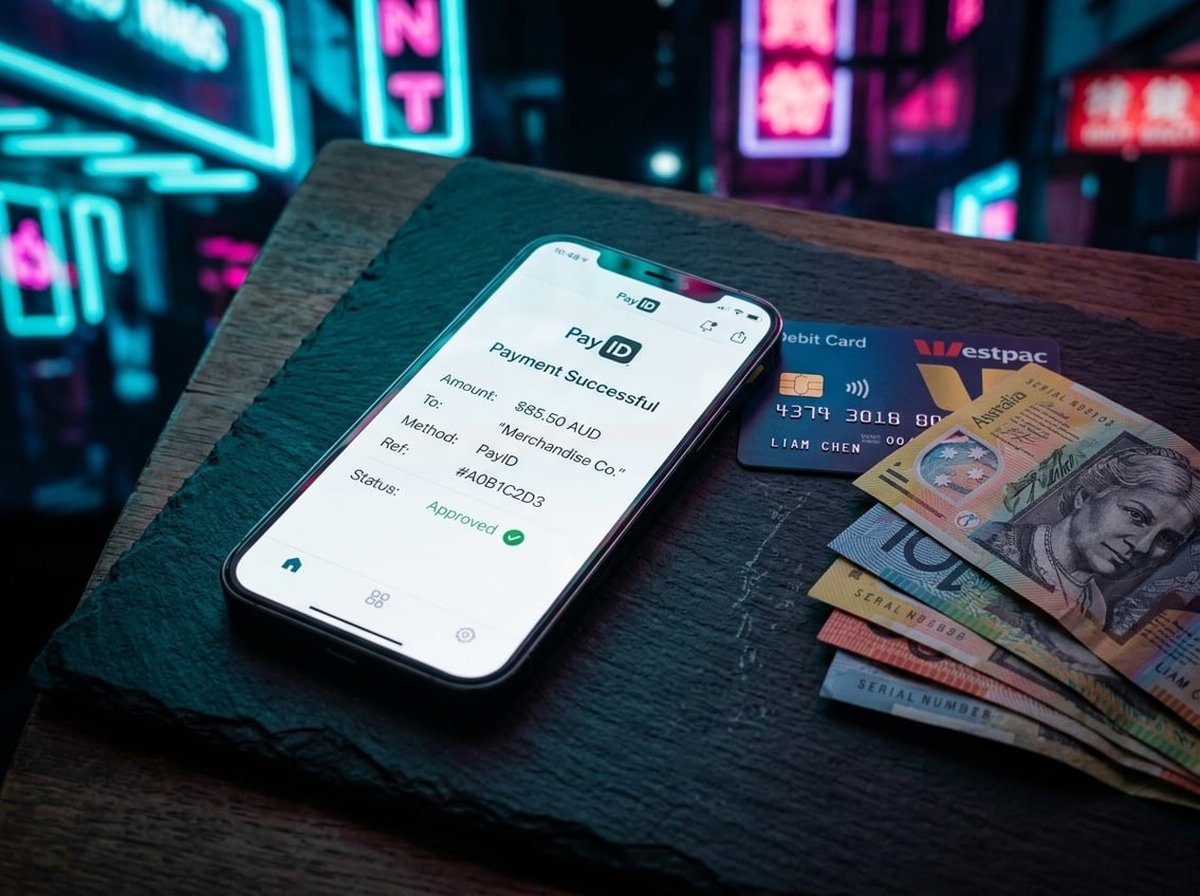
PayID is the option that most changed the shape of the market. It's not a payment provider in itself — it's a lookup layer over Australia's New Payments Platform that lets you send money using a phone number or email as the identifier. Every major AU bank supports it. Transfers settle in seconds. For casinos that accept it on both deposit and withdrawal, PayID has become the default choice for most players.
Cryptocurrency has grown from a fringe option to something like 20 percent of AU casino payment volume, on rough estimates. Bitcoin, Ethereum, USDT, and Litecoin cover the vast majority of crypto transactions at AU-facing sites. Stablecoins are worth calling out separately: USDT and USDC hold their value against USD, which removes the balance-volatility problem that Bitcoin and Ethereum have.
Prepaid vouchers — Neosurf, Cash-to-Code, and similar systems — let players buy a voucher for cash at a retail location and redeem it at a casino for deposit credit. This is the only genuinely anonymous casino payment method left in the AU market. It's deposit-only (you can't withdraw to a voucher) and typically capped at $500 per voucher, but for players who want a hard cash budget or who prefer to keep casino spending off the bank statement, it fills a specific gap.
Cards — Visa and Mastercard — still work at many sites for deposits. Whether they work at any specific moment depends on your issuing bank's rules for gambling merchants, which have tightened noticeably over the past few years. Some AU banks decline all gambling-flagged transactions; others allow them but categorise them as cash advances, which attract higher fees.
eWallets like Skrill and Neteller remain useful for players who want a buffer between their bank statements and casino spending. They add a step to the deposit flow but keep the transaction description clean.
Where AU sites still fall short on UX
Coming from a UX design background, the user experience at most AU-facing casinos is, to put it politely, a work in progress. Some of this is regulatory: strict advertising rules on certain jurisdictions force awkward disclosures into the interface. But most of it is just legacy: casinos built on old templates that get patched forward year after year without the underlying friction ever being resolved.
The most common failures I encounter, in rough order of impact on players:
- Cashier flow buries the withdrawal process. Depositing is one click and three form fields. Withdrawing is often five clicks deep, with the withdrawal form gated behind an "identity verification" wall that only appears after you've clicked withdraw for the first time. This friction is not accidental.
- Bonus terms hidden behind expanders. The wagering requirement, maximum bet, and game contribution details for a bonus are typically inside collapsed panels that most players will not open. This is a design choice, not a technical limitation, and it costs new players real money.
- Session limits absent or hidden. Responsible gambling tools are often three menu levels deep. A site that puts deposit limits and session timers on the main account page — rather than under a "Preferences" tab under a "Settings" menu — is a site whose design has taken player protection seriously.
- No transaction history that shows net position. Most casinos will show you deposits and withdrawals as two separate lists. Almost none will show you your net position over a chosen period as a single number. This is the number every player most wants to know, and it's specifically not surfaced.
- Live chat gated behind login. If you have to sign up before you can talk to support, you have less information for your deposit decision. Sites that offer pre-signup chat are more confident about the answers.
None of these are dealbreakers on their own. But collectively, they tell you how much the operator has invested in making the site work for players versus just work for players' money.
Reading a welcome bonus like a range
Poker teaches you to think in ranges — the set of all hands an opponent could plausibly have, weighted by likelihood, evaluated against your own equity. Casino bonuses reward the same kind of thinking. The headline number is a bait; the range of realistic outcomes is what actually matters.
Take a common offer: 200 percent up to $2,000 with 40x wagering on bonus, 5x cashout cap, and 7-day expiry. On a $200 deposit, you get $600 to play with (deposit plus $400 bonus). The realistic outcomes look like this:
- Lose the balance during rollover. Most likely outcome. You bet through some fraction of the wagering, variance runs against you, balance hits zero. No harm beyond the initial deposit.
- Meet the wagering with balance remaining, cash out. Less likely. Requires either running above expected value across the rollover or hitting a large win early. Cashout capped at 5x the bonus amount ($2,000).
- Meet the wagering but with less than the cashout cap. Common if you get lucky in one direction but not enormously. You keep what you have.
- Trigger a maximum-bet violation and forfeit. More common than it should be. Any bet over the max-bet-during-bonus clause voids the bonus and any winnings derived from it.
Expected value across those outcomes is often negative — sometimes materially so — but not always. The offers with lower wagering, higher cashout caps, and cleaner terms can be marginally positive EV. The offers with heavy wagering and low caps are the operators harvesting predictable losses from players who haven't done the maths. Reading the T&Cs is the price of admission to the good bonuses; skipping them is opting into the bad ones.
Wagering: the maths casinos don't want you to do
Wagering requirements are the most important number in any bonus offer, and the way they're expressed is deliberately confusing. Three variations you'll see:
40x on bonus. If the bonus is $400, wagering is $16,000. Straightforward.
40x on deposit plus bonus. If deposit is $200 and bonus is $400, wagering is 40 × $600 = $24,000. Half again as much betting to clear.
40x on winnings from free spins. If free spins produce $50 in winnings, wagering is $2,000 on those winnings. Sounds small, but on top of any deposit rollover it stacks.
Once you have a wagering figure in dollars, you can estimate what your losses will look like clearing it. On pokies with average 96 percent RTP, the expected loss per dollar wagered is $0.04. So $16,000 of wagering has an expected loss of $640 — which is more than the bonus itself. This is the maths that shows why heavy-wagering bonuses are systematically negative EV for the average player.
Game contribution weightings make the picture worse. Table games and video poker typically contribute 5 to 25 percent of a bet toward wagering, meaning the effective wagering requirement is multiplied when you play them. A blackjack player clearing a $16,000 wagering requirement at 10 percent contribution is actually wagering $160,000 through the site. The house edge on any sensible game structure will eat a bonus of that size many times over.
Pokies dominance and what differs site-to-site
Every AU-facing online casino australia will feature pokies as its main game category. What varies is the studio mix, the RTP configuration on the games (many titles can be deployed at variable RTP), the volume of jackpot-eligible titles, and the freshness of the library.
The studio mix matters most. Every serious operator carries the core seven or eight developers — Pragmatic Play, NetEnt, Play'n GO, Games Global, Nolimit City, Hacksaw, Push Gaming, Big Time Gaming. Beyond that, differentiation comes from the middle tier of studios and any exclusives. A library of 3,000 titles is not automatically better than a library of 800 if the 3,000 includes hundreds of unknown-studio games whose maths and RTP disclosure are not verifiable.
Configurable RTP is worth understanding. Many of the biggest pokie titles ship with two, three, or four different RTP versions. A casino can choose which version to deploy, and unless the operator publishes a public list of RTPs by title, you cannot tell from the outside which version you're playing. Reputable operators publish this information; sites that don't are worth avoiding for extended pokie play, because the same title can be four percentage points less generous on their site than at a competitor.
Live dealer: worth the latency?
Live dealer content is streamed from studio floors in Europe, mostly Latvia, Malta, and Romania. From Melbourne, that's a round-trip network latency of somewhere between 250 and 350 milliseconds on a good connection. On a mid-tier mobile connection or ADSL, latency climbs to 400 to 600 milliseconds. That's imperceptible for watching but noticeable for interaction, particularly during timed betting rounds.
Whether live dealer is worth the extra friction depends on what you're playing. Roulette and baccarat are largely passive; the dealer runs the game and you place bets in a window between rounds. Latency doesn't matter. Blackjack and Casino Hold'em, where you make decisions on each hand, are where the lag can trip you up — particularly if the site has a short decision timer.
Game selection at the live tables has expanded considerably beyond the classics. Evolution's Crazy Time and Monopoly Live, the various Lightning-branded variants of roulette and dice, and Pragmatic Play's PowerUP Roulette have all built substantial player bases in the AU market over the past few years. The game-show format tends to have higher house edge than the traditional table games, which is worth knowing before you sit down at Crazy Time expecting the same expected value as roulette.
Something worth flagging on the live-dealer side specifically: the studios stream in real time and the platform records the outcomes on a public gaming feed, which means the round-by-round history at any given table is verifiable by anyone with the right analytics tool. Long-run RTP on live blackjack and baccarat tables converges very close to the theoretical published numbers because the sample sizes are enormous. If you ever hear a claim that a specific live table "runs hot" or "runs cold," it's a claim that doesn't survive contact with the actual data — live dealer statistics are one of the few places in the industry where transparency is high enough to falsify that kind of folklore quickly.
Mobile-first: what to check before depositing
Sixty to seventy percent of AU casino play now happens on mobile. Some sites have caught up with this; many still design for desktop and let the responsive layout sort out mobile as an afterthought. Signs to look for before you deposit:
Does the cashier work on mobile? Some sites have deposit flows that break on mobile Safari — dropdowns that don't work, form fields that don't fit, PayID QR codes sized for desktop. Test the deposit flow before you're depositing under pressure.
Does the game lobby filter well? If you can't easily narrow down 3,000 pokies to the ones you actually want to play, the site is going to be a chore to use over time. Provider filter, feature filter (Megaways, buy-bonus, jackpot), and search that indexes game names properly are all things a well-built mobile lobby will have.
How does live chat work on mobile? Some sites open live chat in a modal that eats the whole screen; others use a slide-up drawer. Either can be fine, but a chat that pushes you off the current page (or into a separate tab) is a bad experience mid-play.
Are bonus terms readable? Bonus terms and conditions are legally required to be accessible; whether they're actually readable on a small screen without pinch-to-zoom is a different question. If they're not, the operator has made a choice about what they want you to focus on.
Withdrawal speed by method, in real numbers
The advertised withdrawal times on every casino's cashier page are almost universally optimistic. Real numbers, based on tracked withdrawals across the AU market over the past year, look more like this:
PayID: approvals typically 1–6 hours during business days for verified accounts, essentially instant transfer once approved. First withdrawals often 12–36 hours because of KYC.
Crypto (BTC, ETH, USDT): approvals 1–8 hours for verified accounts, network confirmation adds 10–60 minutes depending on the coin. Total end-to-end typically under 12 hours.
Bank transfer (BECS): approvals similar to PayID but transfer itself adds 1–2 business days as it settles through the traditional banking system.
Card withdrawal: approvals 4–24 hours; the actual funds arrive in your card account 3–5 business days later due to Visa/Mastercard chargeback processing. Slow, but predictable.
Wire transfer: approvals 4–24 hours, transfer time 2–7 business days depending on how many correspondent banks are involved.
The variance around these numbers is enormous. A well-run site can process PayID cashouts in 30 minutes. A poorly-run site can drag a card withdrawal out to two weeks. The single biggest predictor of speed is not the method — it's the operator's internal review efficiency, which is why choosing a site with a clean withdrawal reputation matters more than choosing a specific payment method.
Verification friction: KYC in practice
Every reputable AU-facing operator will run KYC (Know Your Customer) checks before releasing withdrawals. This is a licence condition at Malta, part of anti-money-laundering compliance under most other regulators, and universal across the industry. The typical document set: government-issued photo ID, proof of address dated within three months, and sometimes a proof of payment method (card front photo with middle digits obscured, or a bank statement showing the account).
The friction here is often the difference between a good and bad withdrawal experience. Some operators run KYC proactively — they'll prompt you to upload documents shortly after registration, and they'll clear you long before your first withdrawal request. Others wait until the first withdrawal, then hold the withdrawal in review while they process your documents. Same end state, very different player experience.
My recommendation is always to upload KYC documents immediately after account creation, before you deposit. It takes ten minutes and eliminates the most common source of first-withdrawal delay.
Loyalty programs and the VIP myth
Almost every AU casino advertises a VIP or loyalty program. The programs are structured to look valuable — tier ladders, points systems, exclusive bonuses, dedicated account managers — but the actual value delivered is often modest for anyone below the top tiers.
Loyalty points typically accrue at rates like $1 in bonus per $100 wagered, which is a rebate of one percent on wagering. On pokies with 96 percent RTP and a 4 percent house edge, that reduces the effective edge to 3 percent. Real, but not transformative. Cashback offers — usually 10 to 20 percent of net losses returned as bonus or cash — are worth more if they're on a short cycle (weekly) and structured as cash rather than wager-locked bonus.
The VIP tiers usually only unlock meaningfully improved terms — higher deposit limits, faster withdrawal processing, personal account managers, no-wagering reload bonuses — for players wagering seriously significant sums per month. If you're not that player, don't optimise for tier progression; the effective bonus value doesn't justify the volume required to reach it.
RTP disclosure: what to look for
Return-to-player is the single most important number attached to any pokie or casino game. It's the long-run theoretical percentage of wagered money the game returns to players. A 96 percent RTP pokie will, over millions of spins, return $96 for every $100 wagered.
The critical thing to check at any casino is whether they publish RTP information game-by-game. Some do — usually in a dedicated fair-play or games-info section. Some don't. Sites that don't publish RTPs are either running games at whatever RTP the studio ships as default (usually fine) or running configurable-RTP games at reduced settings (not fine). You cannot tell which from the outside.
Independent auditors — eCOGRA, iTech Labs, GLI, BMM Testlabs — provide the third-party verification. A live eCOGRA seal on the casino's footer, linked to an active certificate on the auditor's website, means someone independent has checked the RNG and game outcomes recently. A dead seal, or a seal that doesn't link anywhere, is worth nothing.
Red flags: sites to walk away from
Some patterns come up often enough to be reliable warning signs. If a casino you're considering has any two of these, treat that as a walk-away signal. Any three, and the site should not be receiving your deposit.
- No visible licence, or a licence that doesn't verify. Every legitimate operator publishes its licence with a clickable link. If it isn't there, or the link doesn't lead to a live registry entry matching the operator, that's disqualifying.
- Wagering requirements above 50x. Anything above 50x is designed to be uncleared. This is not a bonus; it's a marketing headline attached to a trap.
- Maximum-cashout caps on deposit bonus winnings. Some sites cap winnings from bonus play at 3x to 5x the bonus amount. This dramatically reduces the upside of the offer while leaving the downside intact.
- Reverse-pending windows longer than 48 hours. A 24-hour reverse pending is standard and mostly tolerable. Anything longer is designed to erode player resolve to cash out.
- Live chat that responds only after signup. If you have to commit to the site before you can ask questions, the site isn't confident in its answers.
- Software providers you've never heard of dominating the lobby. Some legitimate small studios exist. But a lobby dominated by unfamiliar names, with almost no titles from the recognisable industry majors, suggests the site isn't paying industry-standard licence fees — which usually means the games aren't independently audited either.
- Multiple unresolved complaint threads on independent forums. Isolated complaints happen at every casino. A pattern of unresolved payout disputes across dozens of threads is a systemic issue.
Session discipline that actually works
The behavioural side of online casino play is where the biggest edges are for players. The site's economics don't change; what changes is how much of your money the site's economics have the chance to act on. Some habits worth developing:
Set the budget before you open the casino. Deposit the session budget as your first action; when it's gone, the session's over. Not "I'll play until I feel like stopping" — a specific number.
Use deposit limits. Every reputable operator lets you set daily, weekly, and monthly deposit caps. Set them below what you can comfortably afford, not at what you think you'd spend. The limits are enforced on the operator side and can't be raised instantly.
Log everything. A spreadsheet with deposit, withdrawal, and net position for each site over each month. "I'm about even" feeling almost always turns out to be net negative when checked against actual records.
Vary game selection. Sticking to one pokie because you had a good session on it once is a strong bias and a false one. Rotate across two or three titles you know; variance smooths and boredom doesn't push you into raising stakes.
Log out to end the session. The friction of typing a password to log back in is often enough to break the auto-pilot of chasing a losing streak.
Where the market is heading
Two forces are pushing the AU online casino market forward. On the regulatory side, the ACMA's enforcement powers keep expanding and the National Consumer Protection Framework keeps tightening. BetStop, introduced in 2023, has become one of the most effective self-exclusion registers globally and its scope is under active review. Australian federal policy has been trending toward broader restrictions on offshore operators for a decade and there is no serious constituency arguing the other direction.
On the operator side, consolidation continues. The Curaçao reform process is squeezing weaker operators out; Malta's licensing costs are excluding smaller brands; the surviving operators are larger, better-capitalised, and more compliance-focused than the market of five years ago. This is genuinely positive for players who care about safety and reliability; it's slightly negative for players who value bonus generosity, because compliance costs money and margins compress.
The medium-term likely picture is a smaller number of larger AU-facing operators, tighter regulation from Curaçao and other offshore jurisdictions, and steadily improving player protection standards. The trade-off is less choice at the fringes and, probably, less generous bonusing. Most experienced players would take that trade.
Frequently asked questions
Can Australians legally play at online casinos?
Yes, from the player's side. The Interactive Gambling Act 2001 makes it an offence to offer prohibited online gambling services to Australian residents, but the offence sits with the provider, not the person placing the bet. There is no criminal or civil consequence in Australian law for an individual who deposits, plays, or withdraws from an offshore-licensed casino.
How do I know if a casino is safe to deposit at?
The three fastest checks are the licence (verified against the regulator's own database), the withdrawal history (searchable in independent complaint forums), and the specific payment methods offered (PayID and AUD-native bank rails suggest the operator has done AU-specific compliance work). All three together is a strong signal; missing one is a caution; missing two or more is a walk-away.
What's the fastest payout at Australian online casinos?
PayID withdrawals settle in seconds once the casino releases them. Cryptocurrency withdrawals arrive in minutes at most. Both are effectively same-hour end-to-end at operators with tight internal review processes. Card and bank wire withdrawals are dramatically slower, typically one to five business days after approval.
Do I need to pay tax on winnings?
For recreational players, gambling winnings are generally not treated as taxable income in Australia because gambling is not considered a profession. The Australian Taxation Office applies different tests to professional gamblers whose gambling activity meets the criteria for a business. Anyone with substantial or consistent gambling income should get personal advice from a registered tax agent.
What is a wagering requirement, and how do I calculate it?
A wagering requirement is the total amount you must bet before bonus funds convert to withdrawable cash. If a 100 percent match bonus on a $100 deposit carries 40x wagering on the bonus, you need to bet $4,000 through the site. If the wagering is on deposit plus bonus, that becomes $8,000. Always convert to a dollar amount before deciding whether the offer is worth taking.
Are mobile casinos safe to use in Australia?
Mobile web casinos are as safe as their desktop equivalents — the underlying platform is the same. Downloaded Android APK files require a bit more caution: verify the file came from the casino's own domain, and check the SHA-256 hash if the operator publishes one. iOS players are usually routed through Safari or Chrome rather than a native app due to App Store restrictions on real-money gambling.
Why do withdrawals get delayed?
The three main sources of delay are identity verification (mandatory on first cashouts, sometimes re-triggered on larger amounts), bonus wagering verification (finance team confirms the requirement is met), and reverse pending windows (a designed delay during which you can cancel and gamble the money back). Reputable operators either don't have reverse pending or make it opt-in.
What should I do if my gambling is becoming a problem?
Gambling Help Online is the national confidential support service — 1800 858 858, staffed around the clock, free to call. State services (Gambler's Help in Victoria, GambleAware in NSW, GamblingHelp WA and equivalents) offer face-to-face and phone counselling. BetStop, the national self-exclusion register, lets you block yourself from licensed Australian wagering operators. Talking to someone earlier is far more effective than waiting for a crisis point.